Vision Statement
Re-imagining tight-knit urban housing that enhances the Conservation Area
Having undertaken an extensive architectural and character study of the Newbury Conservation Area, the Design Team, along with the Applicant, have sought to re-imagine tight-knit urban housing on the site. This led to the following Vision Statement:
- Enhance the Conservation Area by creating a new development that restores the character of this part of Newbury, knitting it back into the urban grain of the historic settlement pattern.
- To deliver that objective within the remit of modern expectations for sustainable living accommodation, sense of place, ownership and belonging within a development rich in charm, character, and amenity.
- Therefore, this development will be special. It will enhance the Conservation Area, restoring the identity of this part of Newbury while also meeting modern living expectations.
The surrounding images are photographs from the early 19th Century to the modern day, illustrating the distinctive charm and character of Newbury town centre. The Design Team have sought to reflect the historic character of Newbury within the proposal.
Place Study
A key characteristic of the Newbury Conservation Area is the collection of Passageways, Yards, Courts and Places. All of the historic examples within the Application Site have been lost. However, there are still some existing examples in the vicinity. The above examples are, Saddler’s Court, The Arcade (formerly Church Court), Northcroft Lane and Cromwell Place.
Windows
The local character is typically Georgian, generally using sliding sash windows or small casements with decorative bars. Window openings on grander buildings are often ornamented with brick quoins, soldier courses and simple cills. ‘Tax’ windows are frequently spotted too. The more utilitarian buildings have simpler and less decorative openings.
Shop Frontage Study
The main routes in the Conservation Area are fronted by a combination of ground floor commercial uses, such as Cafés, Public Houses, Inns, Shops and Offices. The mix of frontage design varies, some of the more successful examples are illustrated above.
Eaves and Ridges
The eaves within the Newbury Conservation Area are typically brick corbels, some are more ornate than others and usually appear on the larger, grander buildings. There are numerous examples of gable frontages, finished with decorative barge boards, parapets and even a Dutch Gable. More often, dwellings present a duo-pitch to the frontage, utilising corbelled eaves or a parapet. There are also numerous examples of mansard roofs.
Door Study
The front door is an important feature to all buildings. Differing door styles, their setting and surrounding decoration are reflective of the building’s overall grandeur or modesty.
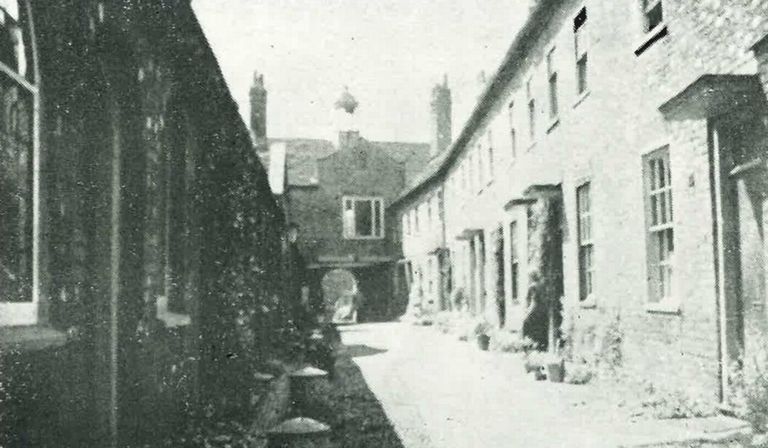
Kimber’s Almshouses
Kimber’s Almshouses (now demolished), located off Cheap Street not far from the existing Post Office, is a wonderful historic example of the modest Georgian dwellings within a tight-knit built environment. The dwellings overlooked a well manicured passageway that led to the main street via a covered arch.
Carriage Arch, Passageway & Ginnel Study
Carriage Arches, Passageways and Ginnels are numerous in quantity and vast in style and appearance. They are a key characteristic of the Conservation Area. Some retain their historic character, some have had that character eroded over the years. There are also some examples of larger gaps being bridged with Ironwork.
Material and Detailing Study
In addition to windows, doors, eaves, roofs, arches, passageways and ginnels, the Newbury Conservation Area is also distinct by way of the material and detailing on the building façades. A collection of those materials and details are captured above.
Ironwork
Perhaps as a consequence of the historic Ironwork in the area, or perhaps the reason why an Ironwork industry established itself in this locale (Plenty’s), fine examples of Ironwork adorning buildings are easy to find and a key characteristic of the Newbury Conservation Area.
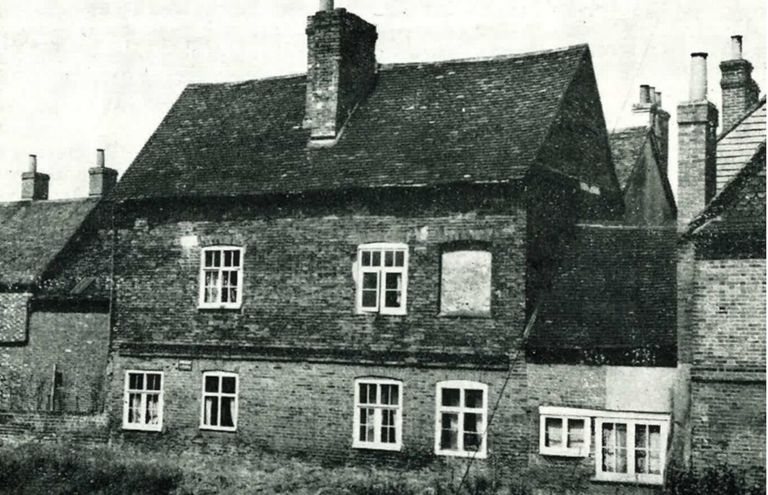
Vine Cottages
Vine Cottages (now demolished) were located off Bartholomew Street and are good examples of the modest dwelling typology that once occupied the Application Site.